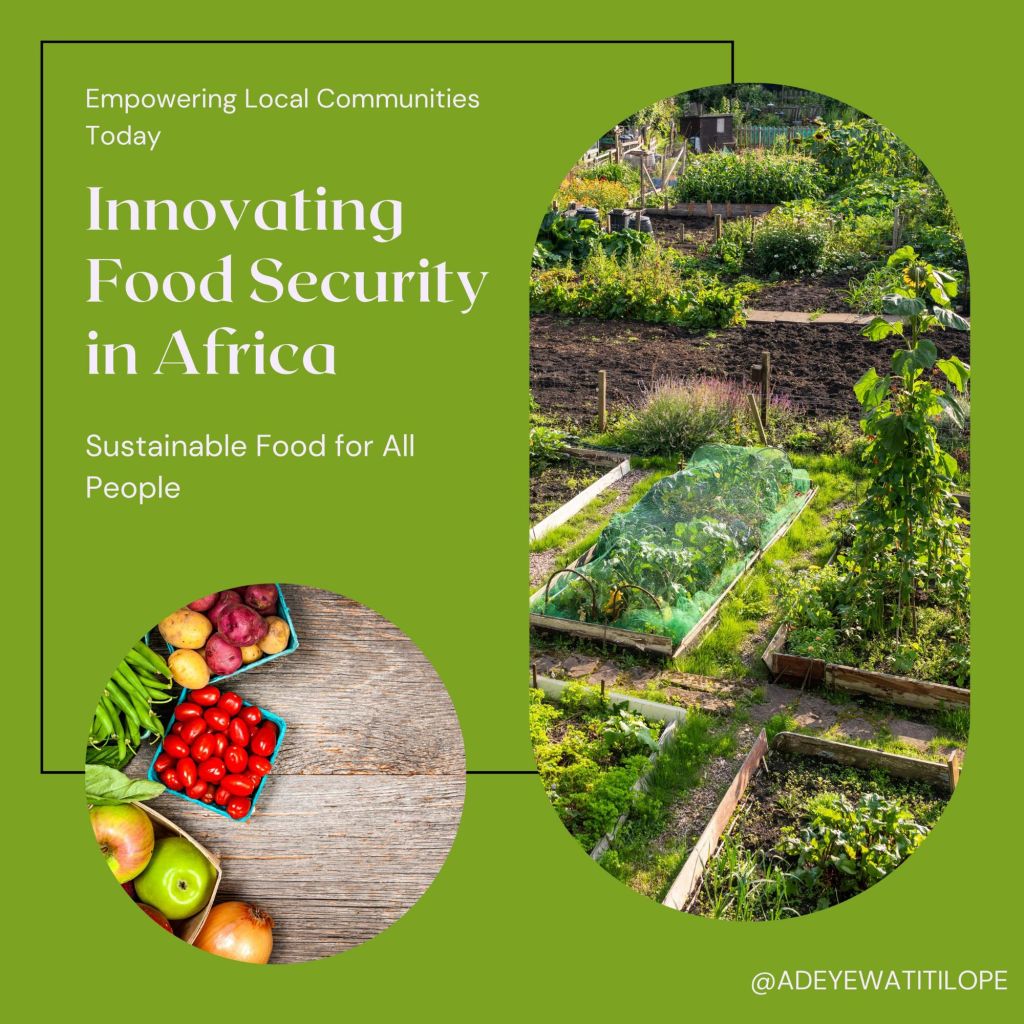
Food insecurity is still a significant problem in Africa, and as a result, rapid population increase and economic competition limit the availability of cheap and quality foods. This challenge can be solved by improving the diverse products and crops primarily found on the African continent. Africa must use the ability to produce foods that are both sustainable and from local sources, as a means through which food availability and accessibility can be guaranteed for a long time.
In Africa alone, many nutrient-dense traditional African crops have been grown for generations. Sorghum, millet, fonio, and other cereals, cassava, and bambara nuts are crops that do well in the different regions of Africa and are highly nutritious. These crops are drought-resistant by nature, and the crops need minimal inputs as compared to the imported crops for cultivation; hence, they are efficient in sustainable cultivation.
However, these crops are not well utilized in current food baskets by being replaced by imported crops such as wheat and rice. Through innovation, producers can value-add indigenous crops and ensure that food baskets contain foods they can afford, contain nutritional value, and are relatable to their culture.
The consumption of local foods and the incorporation of local foods into manufactured foods can help minimize imported foods, which are costly due to transportation and tariffs. What has improved the development of value-added products from these crops is the flow of improved food processing technologies. For example, packaged millet or sorghum-based fortified cereals that meet nutritional requirements and consumer preference are produced locally at a relatively cheaper cost compared to imports.
Take cassava, for example. It is a crop that has been commonly eaten but is currently being transformed into flour products, chips, and even biodegradable material. This makes a new market for the local farmers while at the same time making an effective price for the food producers. In the same way, Bambara nuts that were once considered a ‘poor man’s food’ are being processed into plant-based milk and snacking foods rich in protein to compete with the expensive imported food products.
It should also be noted that when local food product development emphasizes indigenous crops, it directly benefits African farmers. This, in turn, increases the economy of the rural areas, but more importantly, it also decreases the food importation in the whole of Africa, thus enhancing food security on the continent. By prioritizing homegrown solutions, Africa can ensure that food remains available and affordable for its growing population.
Africa has remained a bedrock for innovating for food security, whereby focus has been placed on harnessing the opportunity of indigenous crops. When Africa adopts the culture of using locally available natural resources to produce sustainable food products, this will help greatly in improving the health standards of the people, as well as reducing or eliminating the costly and time-consuming process of importing their foods.
With food product development becoming even more competitive, the way forward therefore is to harness the strength of Africa’s agricultural roots and use it as a weapon for sustainable food security. It means it not only guarantees the low prices and availability but also empowers local farmers, supports the economies, and provides sustainable farming for further food security.
Let’s look back at our roots to move forward, ensuring that no one in Africa goes hungry.

Author: Adeyewa Titilope


 AllDiet Food blog
Leave a comment